

Plagiocephaly and Brachycephaly
Plagiocephaly and brachycephaly are common, highly treatable conditions where an infant’s head develops an asymmetrical shape, typically caused by regular external pressure on the soft skull bones during early infancy.
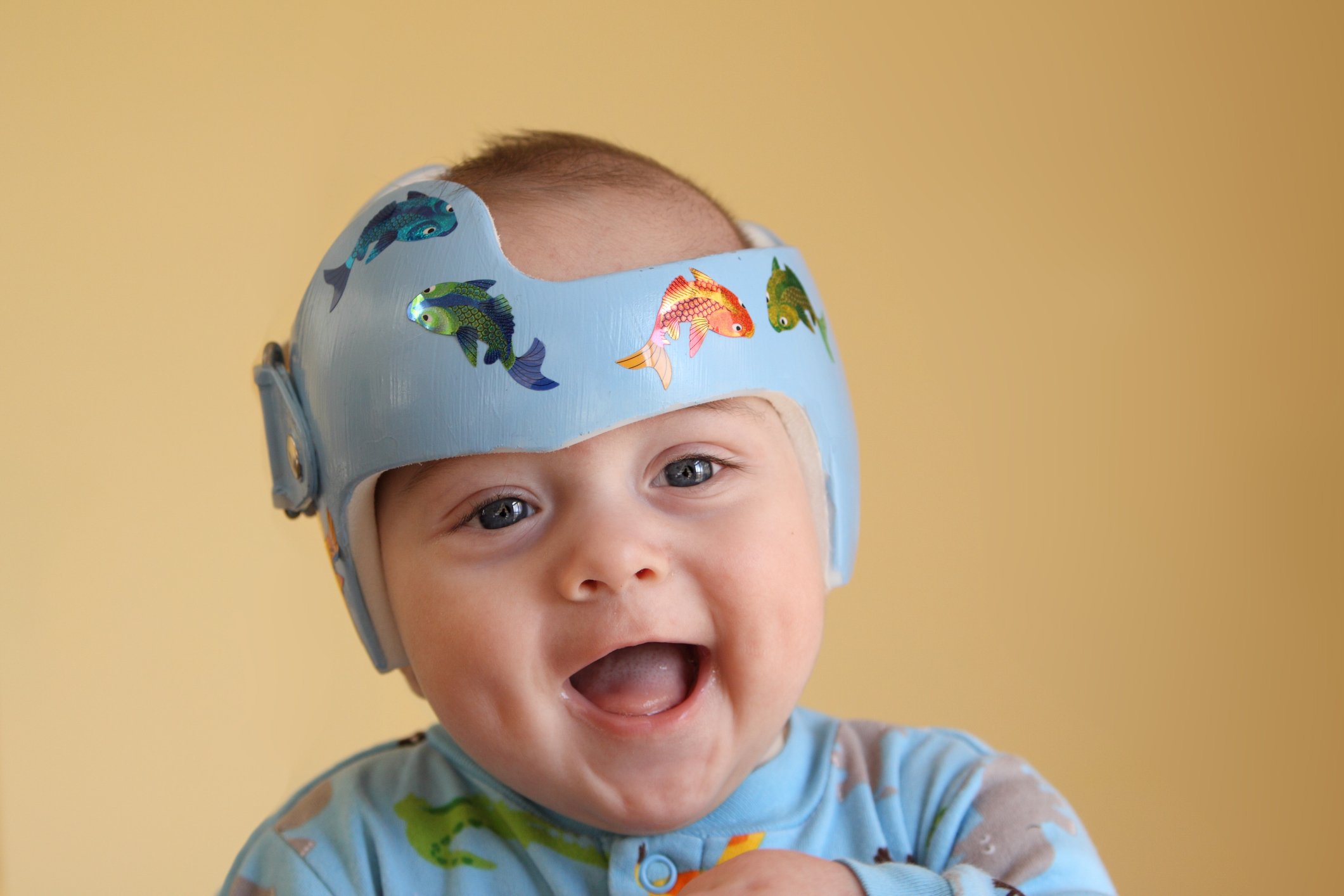
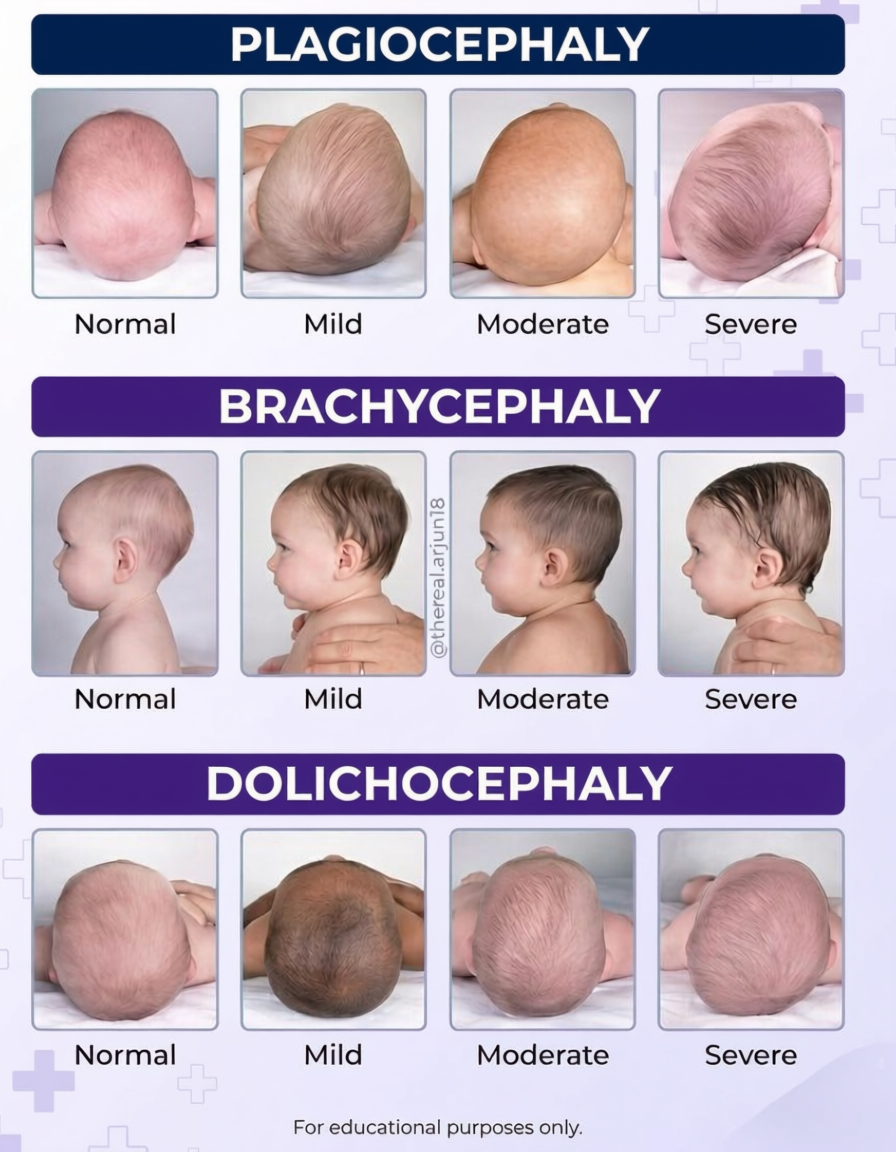
It is completely normal to have questions about how a baby's head shape changes. When simple adjustments like extra tummy time and deliberate repositioning are not quite enough, a custom cranial remoulding helmet is a clinically proven, safe next step to help your child.
Working with Natural Growth: The helmet does not apply painful force or squeeze your baby's head. Instead, it acts as a gentle, custom-fitted pathway. It applies a resting contact over the prominent curves of the skull while leaving open space over the flat spots, encouraging your baby's natural growth to fill the gap.
The Importance of Timing: Your baby’s brain and skull grow at a remarkable pace during their first year. The ideal window to start helmet therapy is between 4 and 9 months of age, when the bone plates are most malleable and growing rapidly. Starting early typically means a shorter treatment path and the most effective results.
A Smooth, Safe Transition: While wearing a helmet for 23 hours a day sounds daunting to a parent, babies adapt to them incredibly fast—usually within just a few days. The materials are lightweight, non-invasive, and meticulously designed to protect your baby's skin while ensuring they sleep, play, and develop normally.
What to Expect: Understanding Cranial Remolding Therapy
Risks of Leaving Severe Flattening Untreated
If moderate-to-severe plagiocephaly or brachycephaly is left untreated past the 12-to-14-month mark (when the skull bones permanently harden and growth slows), the primary risk is permanent facial and cranial asymmetry.
While these conditions are strictly cosmetic and do not affect your baby's brain development, intelligence, or growth, an uncorrected, severe flat spot can cause long-term noticeable changes, including:
Facial Asymmetry: Misaligned ears, an uneven forehead, or asymmetrical cheekbones and eyes.
Functional Challenges: Difficulty fitting standard protective headgear later in life, such as bicycle helmets or sports helmets.
Jaw Misalignment: In severe cases of plagiocephaly, shifted skull bases can contribute to minor jaw misalignment (TMJ issues) or an uneven bite.
Risks and Side Effects of Helmet Therapy
Cranial remoulding helmets are heavily regulated, non-invasive, and clinically proven to be a very low-risk treatment. Significant medical complications are exceptionally rare. However, because the helmet is worn for 23 hours a day, parents may encounter a few minor, easily manageable side effects:
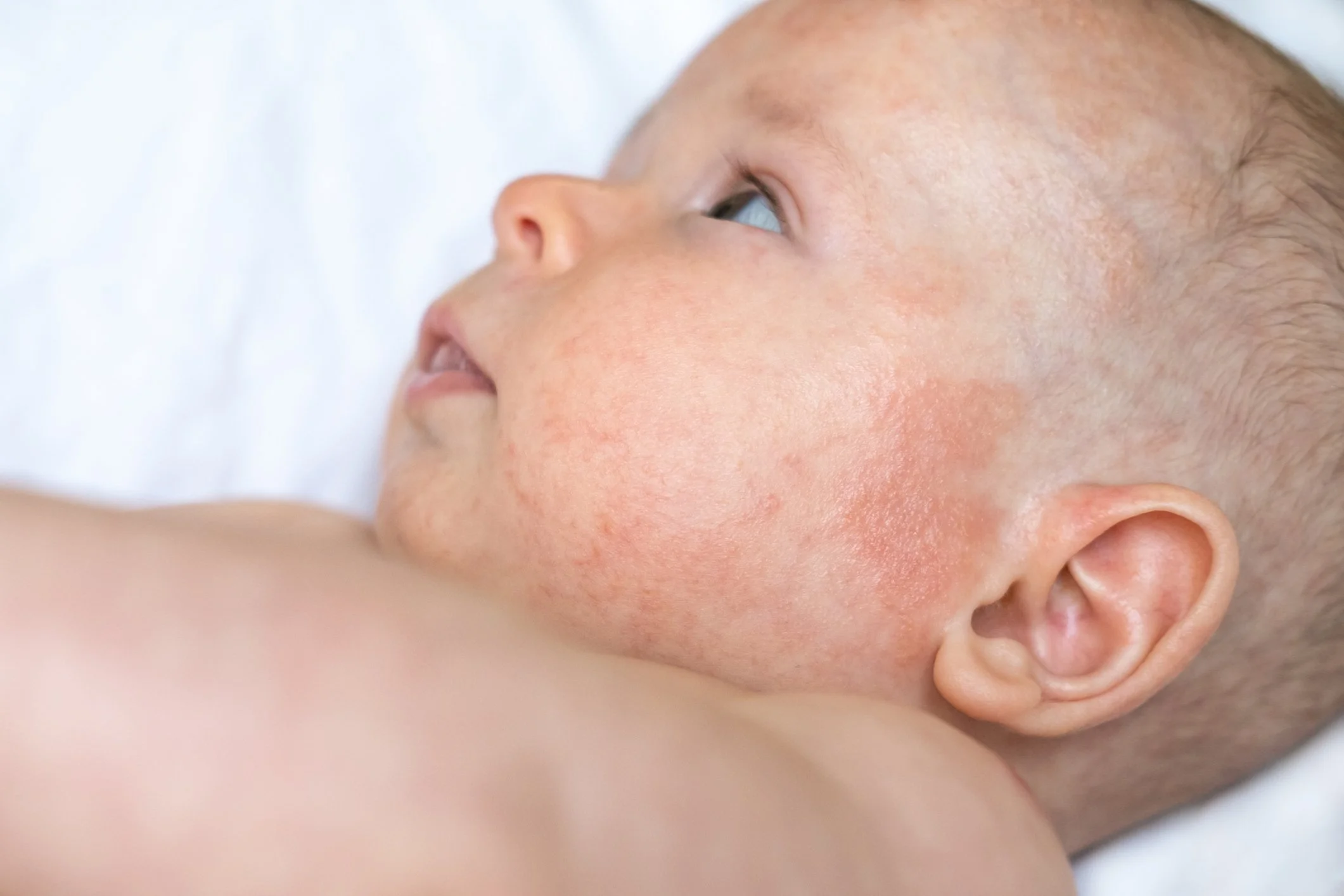
Minor Skin Irritation & Redness: Just like breaking in a new pair of shoes, mild pink spots can appear where the helmet gently contacts the head. If redness fades within an hour of removing the helmet, it is perfectly normal. Persistent redness or localised pressure sores mean the helmet needs a quick adjustment by your orthotist.
Excessive Sweating: Babies primarily regulate their body temperature through their heads. It is very common for infants to sweat profusely during the first two weeks of treatment while their bodies acclimate to the foam lining.
Heat Rash: If moisture builds up under the helmet during warm weather, a mild heat rash can develop. This is easily managed by dressing your baby in lightweight clothing and keeping their sleeping environment cool.
Foul Odors: A combination of sweat and bacteria can trap a stale smell inside the helmet. This is entirely preventable through consistent, daily cleaning of the helmet using rubbing alcohol and mild baby soap.